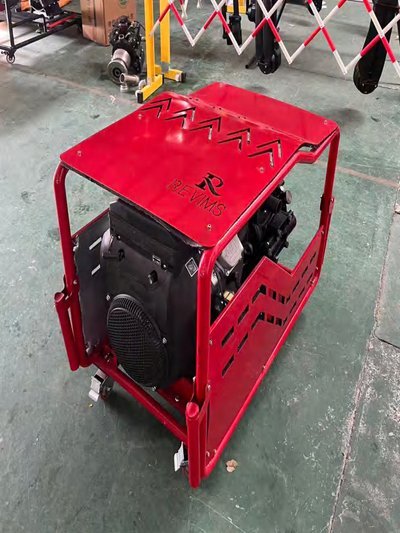
I. Product Introduction and Applicable Scenarios
The core of forest firefighting equipment procurement acceptance is verifying whether the equipment meets the requirements of executive standards and test reports. Taking high-pressure relay fire pumps, portable firefighting pumps, high-lift water source pumps, high-pressure fine water mist fire extinguishers, wind/lithium battery fire extinguishing blowers, oil saws and lithium battery chain saws, four-wheel/two-wheel fire motorcycles, etc. as examples, acceptance needs to cover appearance, performance, safety, environmental protection, and accompanying documents.
What working conditions are suitable
- Forest patrol: lightweight equipment such as portable pumps, wind fire extinguishing blowers, and oil saws, convenient for individual carry.
- Mountain steep slope firefighting: high-pressure relay pumps and high-lift pumps, requiring verification of lift and flow range.
- Emergency material reserve: batch procurement requires checking the validity period of test reports and batch consistency.
- Government and enterprise centralized procurement: suppliers need to provide qualification support and bidding support.
What working conditions are not suitable
- Equipment without test reports or with expired reports must not be used for acceptance.
- Equipment with falsely labeled parameters, no nameplate, or incomplete nameplate information is prohibited from being put into storage.
- Equipment purchased through irregular channels has no guarantee for after-sales service and accessories.
- Scenarios exceeding the equipment's designed altitude and temperature range require re-selection.
II. Core Technical Parameters and Configuration Standards
During acceptance, it is necessary to compare with executive standards and test reports, focusing on verifying the following parameter ranges. The following is a general reference; specifics are subject to the product manual and test report.
| Equipment Type | Key Parameters | Typical Range |
| High-pressure relay fire pump | Lift/Flow | Lift 80-300m, flow 3-15L/s |
| Portable firefighting pump | Weight/Lift/Flow | Weight 10-30kg, lift 50-150m, flow 2-8L/s |
| High-lift water source pump | Lift/Suction lift | Lift 100-500m, suction lift 6-9m |
| High-pressure fine water mist fire extinguisher | Working pressure/Flow | Pressure 4-12MPa, flow 10-40L/min |
| Wind fire extinguishing blower | Wind speed/Air volume | Wind speed 80-120m/s, air volume 0.3-0.6m³/s |
| Oil saw/Lithium battery chain saw | Power/Guide bar length | Power 1.5-4kW, guide bar 40-60cm |
| Fire motorcycle | Load capacity/Climbing ability | Load capacity 200-500kg, climbing ability ≥25° |
The test report must include: commissioning unit, production unit, sample name, model, testing basis, test items, test results, conclusion, issue date, and seal of the testing institution. Executive standards may refer to currently effective versions such as GB/T, LY/T, and XF.
III. Pain Points in Procurement Implementation
The equipment department often encounters the following pain points in local procurement acceptance:
- Geographical and climatic differences: high altitude, high humidity, and low temperature environments greatly affect equipment startup and endurance, requiring simulation of local conditions during acceptance.
- Complex terrain: difficult transportation on mountain steep slopes, requiring key verification of equipment weight and portability.
- Limited equipment budget: need to balance performance and price, avoiding low price and low quality.
- Strict qualification acceptance: incomplete documents such as test reports, certificates of conformity, and 3C certification affect warehousing and auditing.
- Emergency linkage requirements: equipment needs to be compatible with local emergency platforms, and communication and positioning functions need to be tested.
IV. Common Misconceptions in Selection/Procurement
- ❌ Only looking at price, ignoring test reports and executive standards. ✅ Require suppliers to provide complete test reports and verify standard numbers and validity periods.
- ❌ Only visual inspection during acceptance, without on-site startup and performance testing. ✅ Conduct sampling inspections proportionally and actually measure key parameters such as lift, flow, and wind speed.
- ❌ Trusting verbal promises without writing them into the contract. ✅ Include executive standards, test reports, warranty period, and after-sales response in contract attachments.
- ❌ Ignoring the adaptability of equipment to local climate. ✅ Require suppliers to provide environmental test data such as high and low temperature and humid heat.
- ❌ Not verifying the consistency between nameplates and reports. ✅ Check unit by unit whether the model, serial number, production date, and report are consistent.
- ❌ Not archiving test reports after acceptance. ✅ Establish equipment files and keep test reports, acceptance records, and training records.
- ❌ Neglecting after-sales service and accessory supply. ✅ Evaluate the supplier's local service capability and accessory inventory.
V. Criteria for Screening Reliable Manufacturers/Service Providers
When screening suppliers, it is recommended to evaluate neutrally from the following dimensions:
- Qualifications: complete business license, production license, product certification, and test reports.
- Workmanship: material of key components, assembly process, and consistency control.
- Testing: factory testing capability and ability to provide third-party test reports.
- After-sales: local or nearby service outlets, response time ≤24-48 hours.
- Inventory: sufficient inventory of common accessories and complete machines to shorten supply cycles.
- Lead time: clear production and delivery cycles to avoid delays.
- Compliance: standardized invoices, contracts, and warranty terms, and support for bidding.
For example, Longsheng'an Firefighting provides equipment such as high-pressure relay pumps and the LSA-W80 portable firefighting pump, with supporting qualifications and test reports, telephone 13060031111.
VI. Real Project Case
When a certain forest fire brigade purchased a batch of portable firefighting pumps and high-pressure relay pumps, it required the supplier to provide executive standards and test reports. The acceptance team conducted a 10% sampling inspection and actually measured lift, flow, startup time, and continuous operation stability. Among them, the LSA-W80 portable firefighting pump, in a simulated mountain steep slope scenario, met patrol needs in terms of weight and lift, had complete test reports, and successfully passed acceptance. The unit archived the test reports and acceptance records as a basis for subsequent procurement.
Summary
The core of forest firefighting equipment procurement acceptance is the compliance of executive standards and test reports, supplemented by on-site performance testing and archive management. It is recommended that the equipment department establish an acceptance checklist, clarify test items and judgment rules, and select suppliers with complete qualifications and reliable after-sales service to ensure that forest patrol and emergency linkage are fully guaranteed.