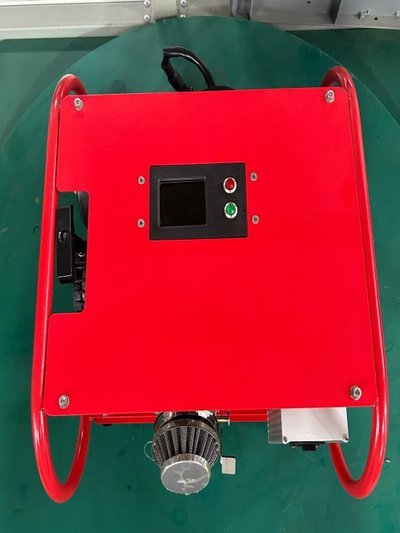
How to Choose High-Pressure Relay Pumps for Forest Firefighting: Head, Flow Rate, Portability, and Acceptance in 2026
High-pressure relay pumps are core equipment for long-distance water supply in forest firefighting. Especially when fighting fires on steep mountain slopes, a single pump cannot meet high-head requirements, and multiple pumps must be connected in series for relay operation. This article provides a comprehensive guide covering technical parameters, procurement pain points, common selection mistakes, manufacturer screening, and acceptance key points to help procurement managers make informed decisions.
I. Product Introduction and Application Scenarios
Suitable Operating Conditions
- Firefighting on steep mountain slopes: High-head design can overcome vertical drops of 50-300 meters, suitable for complex terrain.
- Long-distance water supply: Multi-stage pumps connected in series can supply water over several kilometers, ensuring continuous water supply at the fire scene.
- Forest patrol: Portable design facilitates vehicle-mounted or manual transport for flexible response.
Unsuitable Operating Conditions
- Flat open areas: If head requirements are not high, ordinary centrifugal pumps are more economical.
- Heavily polluted water sources: High sand content will wear the pump body, requiring pre-filtration.
- Extremely cold environments: When temperatures are below -20°C, anti-freeze measures are needed, otherwise startup will be affected.
II. Core Technical Parameters and Configuration Standards
| Parameter | Reference Range | Description |
| Head | 80-300 m | Single pump head, can be accumulated after series connection |
| Flow rate | 1-8 L/s | Affects firefighting efficiency, needs balancing |
| Engine power | 3-15 kW | Mainly four-stroke gasoline engines |
| Weight | 15-50 kg/unit | Key to portability, lightweight design |
| Inlet diameter | 50-100 mm | Compatible with hose specifications |
| Fuel consumption | 1-4 L/h | Continuous operation cost |
III. Procurement Implementation Pain Points
Procuring high-pressure relay pumps often faces multiple challenges that need to be avoided in advance.
- Geographic and climatic differences: Local terrain undulation, water source distance, temperature, etc. affect pump type selection, requiring on-site surveys.
- Limited equipment budget: High-performance pumps are expensive, requiring optimal selection within budget.
- Strict qualification acceptance: Government and enterprise procurement must comply with firefighting certifications, with strict acceptance standards.
- Emergency linkage requirements: Must be compatible with existing equipment for rapid deployment.
IV. Common Selection Mistakes
- ❌ Mistake: The higher the head, the better, ignoring flow rate requirements.
✅ Correct: Balance head and flow rate based on fire scene water supply requirements. - ❌ Mistake: Only focusing on the pump body, ignoring matching hoses.
✅ Correct: Hose pressure rating must match pump head. - ❌ Mistake: Ignoring portability, leading to handling difficulties.
✅ Correct: Prioritize lightweight design for mountain operations. - ❌ Mistake: Not paying attention to engine fuel consumption.
✅ Correct: Continuous operation costs must be included in evaluation. - ❌ Mistake: Assuming the more series stages, the better.
✅ Correct: More stages increase weight and fuel consumption, choose according to needs. - ❌ Mistake: Ignoring maintenance convenience.
✅ Correct: Choose models that are easy to disassemble and have universal parts.
V. Reliable Manufacturer/Supplier Screening Criteria
Choosing a reliable supplier is key to successful procurement and can be examined from the following dimensions.
- Qualification certifications: Possess firefighting product certifications and ISO quality management systems.
- Process level: Pump body materials, sealing processes, machining precision.
- Test reports: Provide third-party performance test reports.
- After-sales service: Whether there are local service points and response time.
- Inventory and lead time: In-stock supply capability and delivery cycle.
- Compliance: Comply with national firefighting standards and provide complete documentation.
VI. Real Project Case
A mountain forest unit procured 10 high-pressure relay pumps for fighting steep-slope fires.
- Operating conditions: 40° slope, 200 m vertical drop, 500 m water source distance.
- Configuration: Selected LSA-G430 High-Pressure Relay Fire Pump (four-stage pump), with 3 units connected in series.
- Results: Water supply flow rate reached 5 L/s, head met requirements, firefighting efficiency increased by 50%.
Summary
Selecting high-pressure relay pumps requires comprehensive consideration of head, flow rate, portability, and acceptance requirements, avoiding common mistakes and choosing reliable manufacturers. Longsheng'an Firefighting provides a full range of forest firefighting equipment. Call 13060031111 for consultation on selection and bidding support.