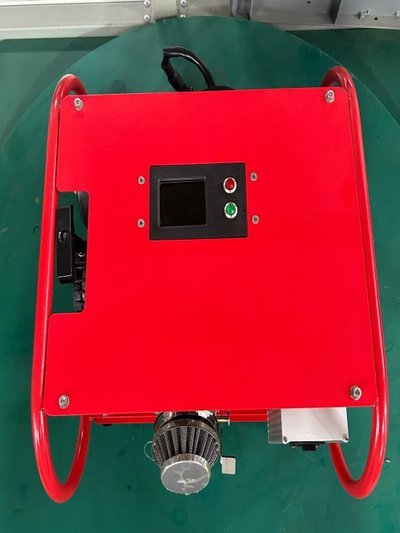
A complete forest firefighting equipment configuration is not simply a collection of devices, but a closed-loop fire suppression chain built around the three stages of "water storage — water delivery — water spraying." The water storage stage relies on water source pumps or reservoirs, the delivery stage uses high-pressure relay pumps connected in series to boost pressure, and the spraying stage achieves efficient fire suppression through water mist extinguishers or fire nozzles.
In a complete configuration, parameters across all stages must be matched; otherwise, issues such as "water supply interruption" or "insufficient pressure" may occur. The following are reference ranges for key parameters:
| Equipment Type | Core Parameters | Recommended Range |
| High-pressure relay fire pump (2-stage to 5-stage) | Head/Flow rate/Power | Head 100–800m, flow rate 2–10 L/s, power 4–20 kW |
| Portable fire pump | Weight/Starting method | Weight ≤15 kg, recoil/electric start |
| High-lift water source pump | Suction lift/Head | Suction lift 3–8m, head ≥50m |
| High-pressure water mist extinguisher | Operating pressure/Reach | Pressure 10–20 MPa, reach 10–15m |
| Pneumatic/lithium battery fire blower | Wind speed/Battery life | Wind speed ≥30 m/s, battery life ≥2h |
| Chainsaw (gasoline/lithium battery) | Guide bar length/Power | Guide bar 16–24 inches, power ≥2 kW |
| Firefighting motorcycle | Water tank capacity/Head | Water capacity 0.2–1 m³, head ≥30m |
Local procurement often faces geographical and climatic differences. For example, large diurnal temperature variations in mountainous areas can affect equipment starting performance, while foggy and humid conditions can corrode metal components. Complex terrain makes transportation difficult, requiring equipment to be lightweight and modular. With limited budgets, balancing performance and cost is a major challenge. Qualification acceptance is stringent, requiring equipment to comply with national or industry standards and provide test reports. During emergency joint operations, inconsistent equipment interfaces between different teams hinder coordination efficiency.
When selecting a supplier, verify their qualifications, such as ISO9001 certification and fire product certifications. In terms of workmanship, pay attention to pump body materials (e.g., aluminum alloy or stainless steel) and sealing technology. Test reports should cover flow rate, head, durability, and other parameters. For after-sales, confirm the warranty period (typically 1–3 years) and repair response time. Sufficient inventory shortens delivery times, and it is also worth evaluating whether the supplier offers emergency replacement equipment. Compliance must meet local fire safety acceptance standards.
A mountain area fire prevention office procured a complete "storage — delivery — spraying" equipment package, including a high-lift water source pump, an LSA-G430 high-pressure relay fire pump (4-stage pump), and water mist extinguishers. The area has steep slopes where manual firefighting was previously inefficient. With the new configuration, three-stage pumps connected in series achieved water delivery at a 600m head, and the water mist units effectively suppressed the fire front, reducing firefighting time by 40%. Additionally, lithium battery blowers were used to clear residual embers, reducing the risk of re-ignition.
Summary: A complete forest firefighting equipment configuration should follow the "storage — delivery — spraying" logic, with rational equipment selection based on local terrain and fire danger ratings. Prioritize certified manufacturers with transparent specifications and comprehensive after-sales support. For further consultation, contact Sichuan Longsheng'an Fire Equipment Co., Ltd. (Tel: 13060031111) for tailored recommendations.