Wheeled ABC dry powder extinguishers in 20kg, 35kg and 50kg sizes differ from portable units mainly in three areas: the trolley or chassis that carries the cylinder, the hose and nozzle assembly sized for higher flow, and the recharge and service points that determine long-term maintenance cost. Buyers specifying these units for export should confirm chassis material and wheel type, hose length and working pressure, and whether the valve head, gauge and fill port are compatible with locally available recharge equipment.
This guide outlines the practical specification points to check before ordering, the common mistakes that cause inspection failures or after-sales problems, and how to vet a supplier. Component-level details such as pressure gauge threads and ranges are covered on the pressure gauge product page.
Most wheeled extinguishers in this class use a welded steel trolley, either painted or powder-coated, with two main wheels and a rear support or stand. Cylinder mounting is typically a saddle or strap arrangement that holds the body securely during transport and discharge. Buyers should confirm the coating type, since coastal or humid markets often require better corrosion protection than standard paint.
Wheel diameter and tread type affect how the unit performs on rough ground, warehouse floors or ramps. Solid rubber wheels are common for export because they avoid punctures; pneumatic wheels roll more easily on uneven surfaces but need inflation checks. Confirm axle diameter and whether wheels are replaceable as spare parts.
Overall height and footprint vary between 20kg, 35kg and 50kg models, which affects container loading. Ask for packed dimensions and gross weight per unit before calculating carton or pallet counts.
| Parameter | Typical range (20–50kg models) |
|---|---|
| Nominal powder capacity | 20kg / 35kg / 50kg |
| Trolley material | Painted or powder-coated steel |
| Wheel type | Solid rubber or pneumatic, 250–400mm diameter |
| Hose length | Approximately 3–8m depending on model |
| Hose working pressure | Typically rated above cylinder service pressure; confirm with supplier |
| Discharge nozzle | Fixed or swivel, powder-compatible design |
| Working pressure | Commonly 12–15 bar at 20°C, depending on specification |
| Test pressure | Usually 1.5× working pressure or higher, per design standard |
Wheeled units carry longer hoses than portables because the operator may need to stand back from the fire. Hose length, bore and fitting threads should be confirmed against the valve outlet and the nozzle inlet. In most designs the hose is secured to the trolley with a clip or bracket so it does not drag during movement.
Nozzle type affects discharge pattern and range. Powder extinguishers generally use a narrow-cone or fan nozzle; swivel fittings reduce hose twist. Buyers should request the hose burst pressure and material (for example, rubber or PVC blend) and confirm compatibility with the powder type supplied.
Hoses, nozzles and gauges are the parts most often replaced in service. Ordering a small spares ratio with the main shipment is common practice for distributors. A wider parts catalogue is listed under our products.
Recharge access depends on the valve head design: some use a separate fill port, others require removal of the valve assembly. Confirm the fill port size and thread so that local recharge stations can connect standard powder-filling equipment. The gauge should be readable without removing the valve and should sit in a protected position on the trolley.
Service intervals for wheeled units are set by local regulations, not by the manufacturer alone. Suppliers can normally provide a service manual and parts list to support the distributor's maintenance operation.
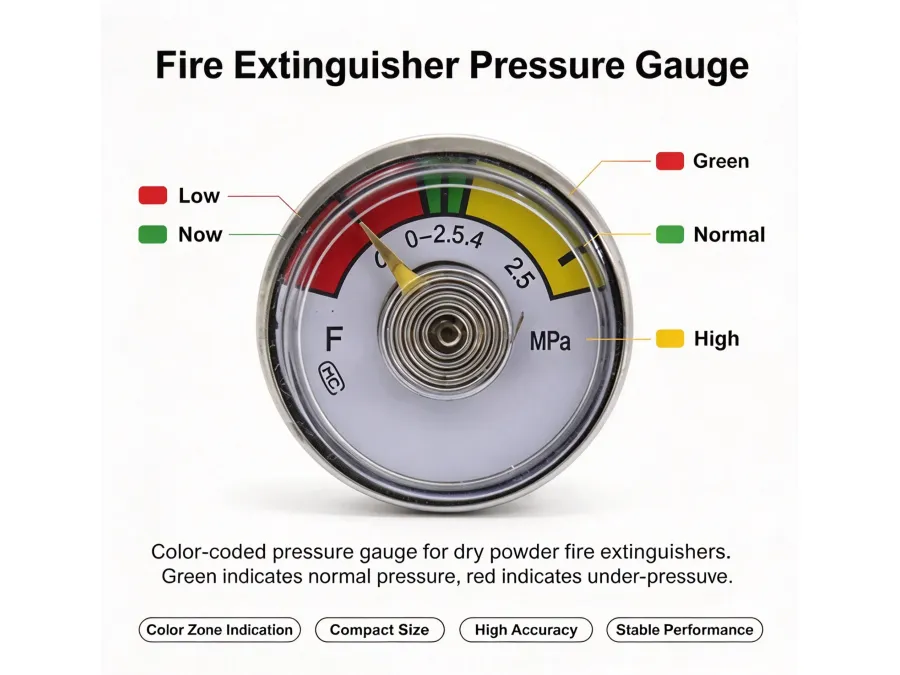
A pressure gauge allows the operator to confirm the cylinder is pressurised before use. Gauge range, thread and dial marking should match the valve; mismatched threads are a frequent cause of leaks. See the gauge specifications for thread and range options.
When vetting a manufacturer, ask for the valve and gauge drawings, hose specifications and trolley material certificates rather than relying on catalogue photos. Confirm which standards the units are designed to meet and request the corresponding test reports; certification scope should be checked against the destination market.
MOQ for wheeled extinguishers is usually expressed in units per model and may be higher for mixed configurations. Lead time typically depends on powder filling, labelling and packaging requirements, so confirm production slots before committing to delivery dates. Documentation should include commercial invoice, packing list, bill of lading and any certificates required for import.
For smaller capacity units in the same product family, see the 20kg wheeled ABC extinguisher and the portable range from 1kg to 8kg. Buyers with questions about compatibility or order terms can review the FAQ or contact the supplier directly.
Wheeled 20kg, 35kg and 50kg extinguishers should be specified by chassis construction, hose and nozzle details, and recharge access, not by capacity alone. Confirming gauge threads, fill port dimensions and spare parts availability at the ordering stage reduces after-sales problems. A supplier that provides drawings, test documentation and consistent spare parts is generally easier to work with over repeat orders.
The main differences are powder capacity, cylinder size and trolley dimensions. Larger units typically have longer hoses and heavier frames, which affects packed weight and container loading. Working pressure is often similar across the range, but buyers should confirm each model's specification rather than assuming commonality.
Hose length varies by model and design, commonly around 3 to 8 metres. The hose should be long enough for the operator to stand back from the fire while the trolley remains stable. Confirm bore, material and end fittings, since thread types differ between valve designs.
Yes, in most designs the gauge is a threaded component that can be replaced during service. The replacement must match the valve thread and pressure range. Mismatched threads are a common cause of leaks, so record the original gauge specification before ordering spares.
Recharge intervals are set by local regulations and by inspection results, not by a single global rule. Units should be checked regularly for pressure indication, powder condition and hose integrity. Distributors should confirm the applicable local service schedule with the authority having jurisdiction.
This depends on the supplier and order specification. Some ship units fully assembled, while others pack trolleys and cylinders separately to reduce volume. Confirm assembly requirements and whether tools or instructions are included before calculating labour costs at destination.
Typical export documentation includes commercial invoice, packing list and bill of lading, plus any certificates required by the destination market. Buyers should also request test reports, a service manual and a spare parts list to support local maintenance and after-sales service.
Some manufacturers offer units without powder for assembly plants that fill locally. Availability depends on the model and valve design. Buyers should confirm fill port dimensions, powder compatibility and whether the pressure gauge is fitted at the factory or at destination.