Hydrostatic testing intervals for extinguisher cylinders typically range from 5 to 10 years, depending on the cylinder type, regional standard, and national fire code. Most portable ABC dry powder extinguishers under EN3 are subject to a first hydrostatic test at 10 years, with subsequent tests every 5–10 years. However, intervals vary by country, so buyers must verify local regulations before setting service schedules.
Hydrostatic testing is a pressure test that verifies a cylinder’s structural integrity. The cylinder is filled with water (or another incompressible fluid), pressurised to a specified test pressure—usually 1.5 times the working pressure—and held for a set period. Any permanent expansion or leakage indicates the cylinder should be rejected.
This test is distinct from the routine visual inspection that service technicians perform monthly or annually. Hydrostatic testing is a destructive-test method that requires specialised equipment and is typically carried out in a workshop or at a certified test facility.
Intervals are set by national standards and fire codes, not by the extinguisher manufacturer. The table below summarises common intervals for portable ABC dry powder extinguishers; always confirm the applicable local requirement.
| Region / Standard | Typical First Test | Subsequent Interval | Notes |
|---|---|---|---|
| Europe (EN3) | 10 years | 5–10 years | Varies by country; some require 5 years for certain cylinder types. |
| UK (BS 5306) | 10 years | 10 years | For extinguishers with a 15-year design life; some extended-life cylinders may differ. |
| US (NFPA 10) | 5 years | 5 years | For stored-pressure dry chemical extinguishers; applies to many portable units. |
| Australia (AS 1851) | 5 years | 5 years | For most portable fire extinguishers. |
| Middle East (varies) | 5–10 years | 5 years | Often aligned with NFPA or EN; check local civil defence requirements. |
| ISO 11602 (international) | 5–10 years | 5 years | Provides a framework; national codes take precedence. |
Note that wheeled extinguishers (e.g., 20kg and above) may follow different intervals; for example, NFPA 10 requires a 5-year hydrostatic test for stored-pressure dry chemical wheeled units.
Several factors can shorten or lengthen the interval between hydrostatic tests. Buyers should consider these when specifying cylinders for different markets.
Steel cylinders generally follow the intervals above. Aluminium cylinders may have different requirements; for instance, some standards require more frequent testing for aluminium shells. Always refer to the cylinder marking and the relevant code.
Extinguishers exposed to corrosive environments (e.g., coastal areas, chemical plants) may require more frequent visual inspections and earlier hydrostatic testing. The interval is a maximum, not a guarantee; cylinders showing corrosion or damage must be tested or replaced sooner.
Local authorities may impose shorter intervals. For example, some countries require hydrostatic testing every 5 years regardless of the standard. Importers should obtain written confirmation from the local fire authority before importing a batch.
Proper records are essential for compliance and for demonstrating due diligence during inspections. Each hydrostatic test should be documented with the test date, test pressure, result (pass/fail), and the technician’s identification.
Manufacturers should provide a certificate of conformity and a test certificate for each cylinder batch. For OEM orders, ensure that cylinders are marked with the required test date and that the marking remains legible after painting or coating.
Buyers and service providers often make avoidable errors regarding hydrostatic testing. The following list highlights frequent mistakes and the correct approach.
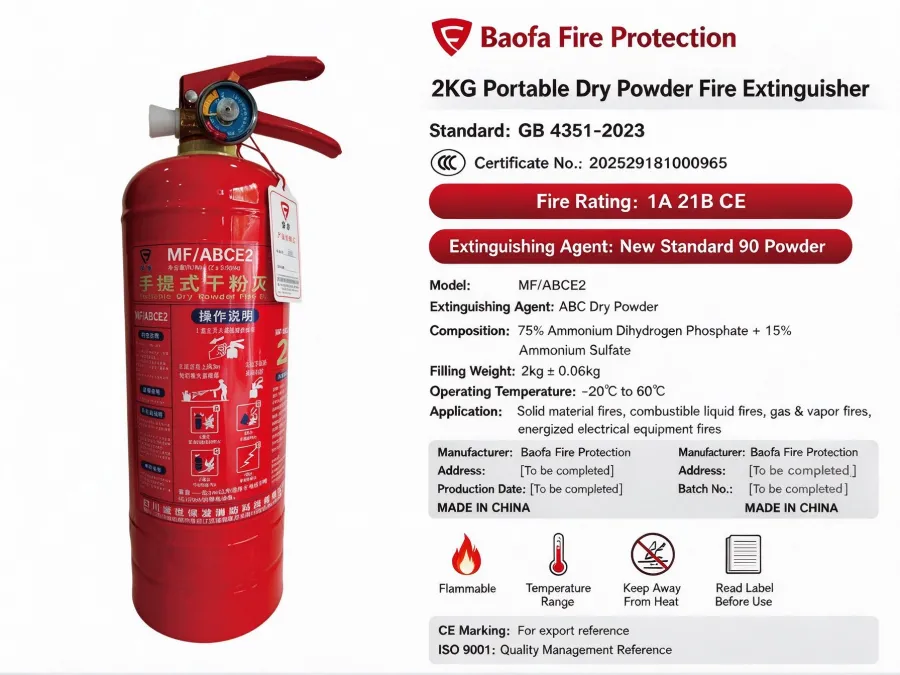
When sourcing ABC dry powder extinguishers, ensure that the cylinders are compatible with the testing regime in your market. For example, if you sell into the US, cylinders should be designed for a 5-year test interval; for Europe, a 10-year interval is common. The 2kg ABC dry powder fire extinguisher is a popular size for both markets, but cylinder specifications may differ.
Ask suppliers for the following:
For OEM orders, clarify whether cylinders are supplied pre-tested or require testing after assembly. Also confirm that the valve and other components are rated for the same test pressure. Our product range includes cylinders and components that meet common international standards; however, always verify local requirements.
Hydrostatic testing intervals for extinguisher cylinders are typically 5–10 years, with the first test often at 5 or 10 years depending on the region. Buyers must confirm the exact requirement for each destination market and ensure that suppliers provide documented test certificates. Proper planning and documentation help avoid compliance issues and extend the service life of the extinguishers.
The interval depends on the destination market. Under EN3 in Europe, the first test is typically at 10 years; under NFPA 10 in the US, it is 5 years. Always check local fire codes, as some countries require 5-year intervals regardless of standard.
Yes. Wheeled extinguishers such as 20kg units also require hydrostatic testing. NFPA 10, for example, specifies a 5-year interval for stored-pressure dry chemical wheeled extinguishers. Intervals may differ in other regions; verify local requirements.
No, hydrostatic testing requires specialised equipment and is typically done in a workshop or certified facility. On-site service usually covers visual inspections and maintenance only.
A failed cylinder must be removed from service and either re-qualified (if permitted) or destroyed. It cannot be returned to service. The test report should record the failure and the cylinder's serial number.
New cylinders are usually tested at the factory as part of the manufacturing process. The first field hydrostatic test is then due at the interval specified by the local code, counted from the manufacturing date or the date of installation, depending on the standard.
Request the cylinder material certificate, hydrostatic test certificate, and marking details. Ensure the test pressure and date format comply with your market's requirements. Third-party inspection can also be arranged.
In some standards, aluminium cylinders may have shorter intervals or additional requirements. For example, certain codes require more frequent testing for aluminium shells. Always refer to the cylinder marking and local code.
Export shipments should include a certificate of conformity, test certificates for cylinders, and material certificates if requested. Some markets also require a declaration of conformity. Check with your freight forwarder and local authority.