For most ABC dry powder extinguishers, steel cylinders remain the default choice on cost and pressure strength, while aluminium cylinders are selected where lower weight and corrosion resistance justify a higher unit price. The right answer depends on capacity, target market, refill practice and the certification route you intend to follow. This guide compares both materials on the factors that matter to importers and assembly plants.
Steel extinguisher bodies are typically drawn or welded from low-carbon steel and finished with an internal lining plus an external powder coating or paint. Aluminium bodies are usually formed from seamless extruded tube or spun aluminium, then anodised or painted. Both are fitted with a threaded neck to accept the valve or head assembly.
In most EN3-style designs, both materials can meet the same performance requirements, provided wall thickness, neck thread and burst performance are engineered correctly. The material itself does not determine compliance; the finished design and test evidence do.
The choice affects shipping weight, corrosion behaviour in humid climates, refill and service life, tooling cost and the price you can quote to distributors. For parts-only buyers, it also determines which valve threads and neck rings you need to stock.
The table below summarises typical differences. Values are indicative ranges and vary with capacity, design pressure and manufacturer specification.
| Parameter | Steel cylinder | Aluminium cylinder |
|---|---|---|
| Typical empty weight (6kg body) | Approx. 2.5–3.5 kg | Approx. 1.5–2.3 kg |
| Corrosion resistance | Requires internal lining and external coating | Inherent; anodising further improves it |
| Typical test pressure range | Usually 25–30 bar for stored-pressure powder | Similar range, design-dependent |
| Relative unit cost | Lower | Higher, often 20–60% above steel |
| Repairability / refill | Widely supported by service stations | Supported, but fewer refurbishment options |
| Tooling and welding | Mature, low-cost production base | Extrusion or spinning; different tooling |
| Best fit | High-volume portable and wheeled units | Marine, humid and premium-weight markets |
Aluminium bodies reduce filled weight, which matters most at larger capacities. A lighter unit is easier to handle in service and can lower freight cost per unit when shipping by air or in mixed containers. For a 1kg or 2kg portable, the saving is modest; for 20kg wheeled units, it becomes noticeable.
Weight savings should always be checked against the total filled weight declared for transport. Powder charge, valve, hose and bracket weights are unchanged, so the body is only one part of the total.
Steel cylinders depend on consistent internal lining and a damage-free external coating. In coastal, tropical or high-humidity markets, chips and scratches are the usual starting point for corrosion. Aluminium resists this naturally, which is why it is often preferred for marine and offshore supply.
Neither material removes the need for periodic inspection. Buyers should confirm that the chosen design allows inspection, pressure testing and refilling through the local service network.
Material choice does not replace test evidence. Request the design and test documentation relevant to your market, and confirm that the cylinder, valve and finished extinguisher are assessed together, not separately.
For finished units, see the 6kg ABC dry powder extinguisher as a common reference size. For component-level sourcing, the full product range lists cylinders, valves, hoses and discharge fittings.
Ask suppliers which material they produce in-house and which is outsourced. A supplier that controls cylinder forming, lining and valve assembly usually has better traceability. Confirm minimum order quantities per capacity and per material, since aluminium lines often carry higher MOQs.
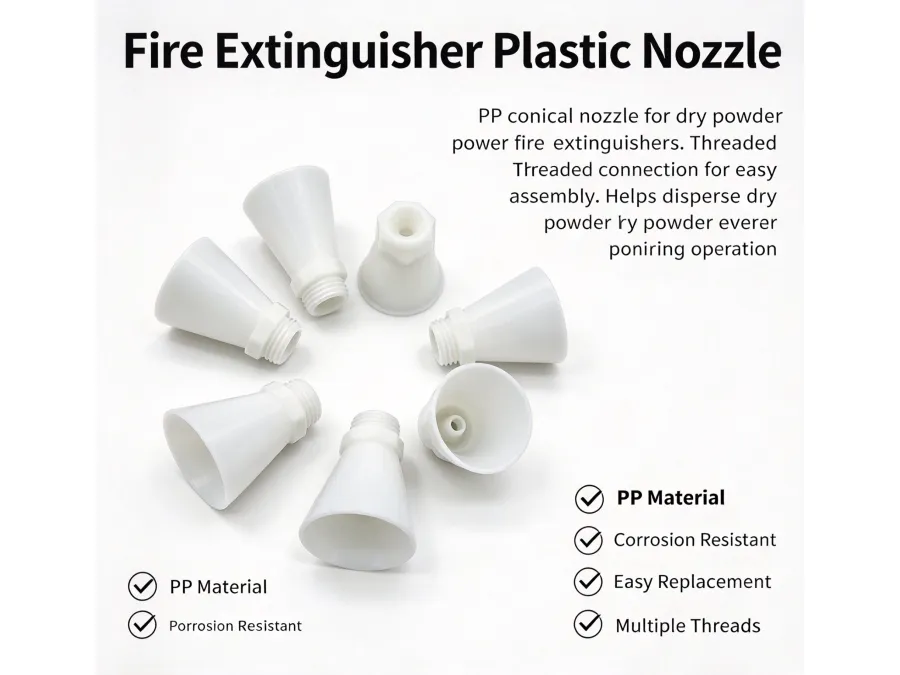
Lead time typically runs from several weeks for repeat orders to longer for new tooling or new neck threads. Documentation should include drawings, test reports, packing lists and marking artwork. For component buyers, specify discharge fittings early: horn and nozzle geometry affects flow rate and must match the valve outlet. The extinguisher horn and nozzle range covers common threaded connections.
Before committing, order samples of both materials in your main capacity and compare weight, coating finish, thread fit and label adhesion. Buyers with recurring questions can review the frequently asked questions for general export points.
Choose steel for cost-driven, high-volume portable and wheeled lines where a sound coating and lining system is maintained. Choose aluminium where lower weight, humid or coastal conditions, or premium positioning justify the higher price. In both cases, confirm the finished design's test documentation and thread compatibility before placing volume orders.
Neither is universally better. Steel offers lower cost and strong pressure performance for high-volume lines; aluminium offers lower weight and better corrosion resistance at a higher unit price. The right choice depends on capacity, climate, refill infrastructure and target price point in your market.
Compliance depends on the finished design, not the material alone. Aluminium bodies can meet EN3-style requirements when wall thickness, neck thread and burst performance are correctly engineered and supported by test reports. Always request design-specific documentation rather than relying on a material claim.
For a typical 6kg body, aluminium is often roughly 1–1.5 kg lighter than steel, depending on wall thickness and design. The saving is proportionally larger on bigger bodies and smaller on 1kg–2kg portables. Check total filled weight, since powder and valve weights are unchanged.
Yes, aluminium resists corrosion inherently and is often anodised for further protection. Steel relies on internal lining and intact external coating, so scratches or chips can start corrosion in coastal or tropical conditions. Both materials still require periodic inspection.
Aluminium bodies typically cost more, often in the range of 20–60% above comparable steel bodies, depending on capacity and finish. Tooling, valve compatibility and minimum order quantities can also differ, so compare total landed cost rather than body price alone.
Only if the neck thread is identical. Steel and aluminium cylinders may use different neck thread standards, so valve and head assemblies must be matched to the specific body drawing. Locking one thread standard per SKU avoids assembly errors and spare-parts confusion.
Request the cylinder drawing with material grade and design pressure, burst and pressure-test reports, lining and coating specifications, neck thread drawing, and batch material certificates. For finished extinguishers, confirm that the cylinder, valve and assembly were assessed together.
Steel is common for 20kg–50kg wheeled units because of cost and strength, while aluminium can reduce handling weight. The decision should consider trolley design, terrain and local service capability. Review wheeled options such as the 20kg wheeled unit before specifying material.