ABC dry powder is a multi-purpose extinguishing agent consisting mainly of monoammonium phosphate (MAP) with additives that improve flow, resist caking and repel moisture. Composition and quality vary between producers, and the specification must match the standard and market you are exporting to. This guide explains typical formulations, what compliance checks buyers should request, and how to verify powder and finished units before shipment.
Most ABC powders are built around monoammonium phosphate, usually in the 70–95% range depending on grade. The balance is made up of ammonium sulphate, additives and small amounts of flow or anti-caking agents. The MAP content is the main driver of fire-extinguishing performance on Class A and B fires.
Silicone or other water-repellent treatments are commonly added to reduce moisture absorption during storage. Particle size distribution and bulk density also influence discharge behaviour and how well the powder coats a fire. Buyers comparing quotations should ask for a technical data sheet rather than relying on the term "ABC powder" alone.
| Parameter | Typical range | Notes |
|---|---|---|
| Monoammonium phosphate (MAP) | 70–95% | Higher grades generally give better Class A/B performance |
| Ammonium sulphate | 0–20% | Filler/co-agent; varies by formulation |
| Moisture content | ≤0.25–0.5% | Lower is better for long storage |
| Bulk density | Approx. 0.8–1.1 g/cm³ | Affects fill weight and discharge |
| Water repellency | Pass/fail per standard | Often tested after conditioning |
| Service temperature | −20 °C to +60 °C (typical) | Confirm against the standard used |
A higher MAP fraction generally improves fire ratings, but it also affects cost and flow characteristics. Two powders with the same nominal MAP content can behave differently if particle size or additive packages differ. For OEM assembly plants, consistency between batches matters as much as the headline figure.
Powder that absorbs moisture may cake inside the cylinder, which can reduce discharge efficiency and complicate servicing. This is why moisture content and water-repellency results are usually requested alongside the composition certificate. Buyers should treat these as specification items, not optional extras.
Requirements vary by destination market. In many markets, extinguishers are assessed against EN3 for construction and performance, with powder evaluated under a related powder standard. Other markets use local approvals or reference recognised international standards. Confirm the exact standard with your importer or authority before ordering.
Typical documentation requested by importers includes:
Do not assume a supplier's existing certificates cover your market or your specific model. Ask for documents that name the product and the standard, and check validity dates. Where a notified body or approval body is involved, confirm the scope of the approval.
Powder quality is best verified through batch testing and a retained sample. Ask the supplier to state the test method and the acceptance limits used for each parameter. If you are assembling extinguishers in your own plant, request powder samples before placing bulk orders.
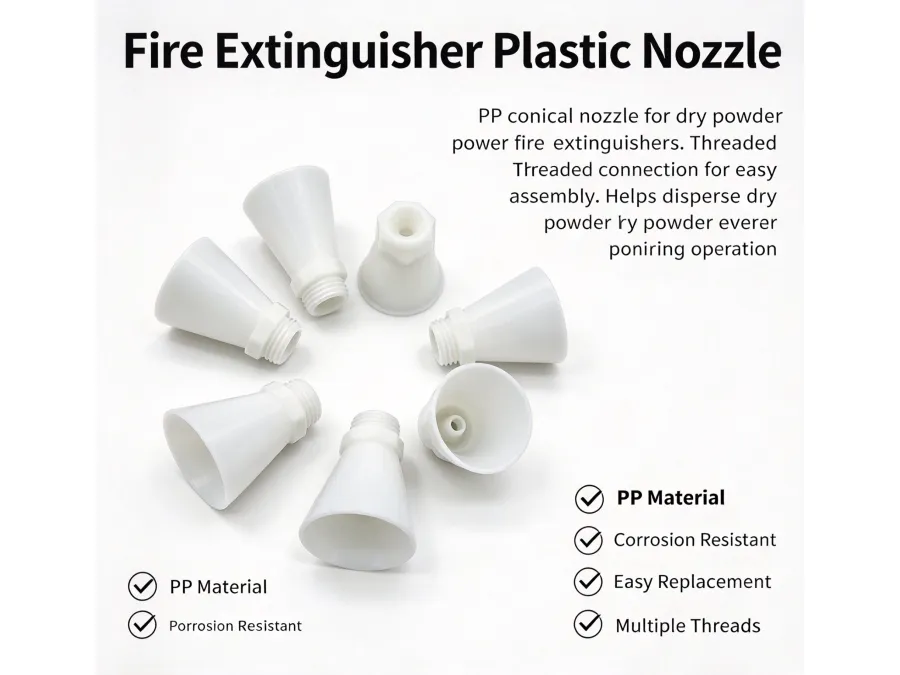
Review the certificate of analysis against your purchase specification, and confirm the batch number matches the drums or bags shipped. For finished extinguishers, verify fill weight and confirm the pressure gauge reads within the specified range. Nozzle and horn condition also affects discharge, so inspect these components as part of the same check — see our extinguisher horn and nozzle range for the parts used across portable models.
Retain a sealed sample from each batch so that any later dispute can be assessed against the delivered material. This is a low-cost step that protects both buyer and supplier.
Powder specification should be matched to the extinguisher size and intended use. Small portable units such as the 1kg and 2kg models are commonly used in vehicles and small premises, while 4kg and 6kg units suit commercial buildings. Larger risks may call for a 20kg wheeled unit.
Higher-MAP powders are often specified where fire ratings must be met with a smaller fill weight. Confirm the rating claimed for each model against the standard and the test report, rather than assuming a direct relationship between fill weight and performance.
Vet powder and extinguisher suppliers on documentation, batch control and consistency, not price alone. Ask how incoming powder is verified, how batches are traced, and what records are kept. A supplier that can explain its process is usually easier to audit.
Clarify minimum order quantities and lead times in writing, since these vary with powder grade and model. For OEM parts and full units, confirm whether the supplier can hold a consistent powder specification across repeat orders. Review our product range for the models and components available, and check the FAQ for common questions on specifications and shipping.
Before committing to volume, request samples, verify documentation and, where practical, arrange third-party inspection. Keep the agreed specification as an annex to the contract so that later deliveries can be checked against it.
ABC dry powder composition, moisture control and documentation are the core factors in export compliance. Specify MAP content, test methods and acceptance limits in writing, and match the powder specification to the destination market and extinguisher model. Consistent documentation and batch records reduce risk for both importers and assembly plants.
ABC dry powder is mainly monoammonium phosphate, typically 70–95% depending on grade, with ammonium sulphate, flow additives and water-repellent treatments making up the balance. Exact formulations vary by producer. Buyers should request a technical data sheet stating MAP content, moisture limits and test methods rather than relying on the generic term "ABC powder".
Generally, a higher monoammonium phosphate fraction supports stronger Class A and B ratings, but performance also depends on particle size, additives and the tested model. Two powders with the same MAP content can behave differently. Confirm the fire rating through test reports for the specific extinguisher rather than assuming a direct relationship.
Requirements vary by market. Many destinations assess extinguishers against EN3, with powder evaluated under a related powder standard, while others use local approvals or recognised international standards. Confirm the exact standard with your importer or authority before ordering, and ensure certificates name both the product and the standard.
Typical documents include a technical data sheet, batch certificate of analysis, safety data sheet for transport, and test reports from an accredited laboratory where applicable. For finished units, request a declaration of conformity or approval certificate. Check that documents reference your model and remain valid.
Formulations include water-repellent treatments, and moisture content is usually limited to around 0.25–0.5% depending on grade. Water repellency is often tested after conditioning. Lower moisture content and good repellency help reduce caking during storage, which supports reliable discharge and easier servicing.
Some suppliers offer powder for local assembly, but this depends on the supplier, grade and order volume. Confirm minimum order quantities, packaging and documentation, and verify that the powder specification matches the standard your finished extinguishers must meet in your market.
The nozzle or horn shapes the discharge pattern and influences how effectively powder reaches the fire. Damaged or incorrect components can reduce performance even with good powder. Inspect these parts as part of incoming checks and confirm they match the model specification.
Verify batch numbers against certificates of analysis, check fill weights and pressure gauge readings, and inspect nozzles and horns for damage. Retain a sealed sample from each batch so any later dispute can be assessed against the delivered material. Record findings against the agreed specification.